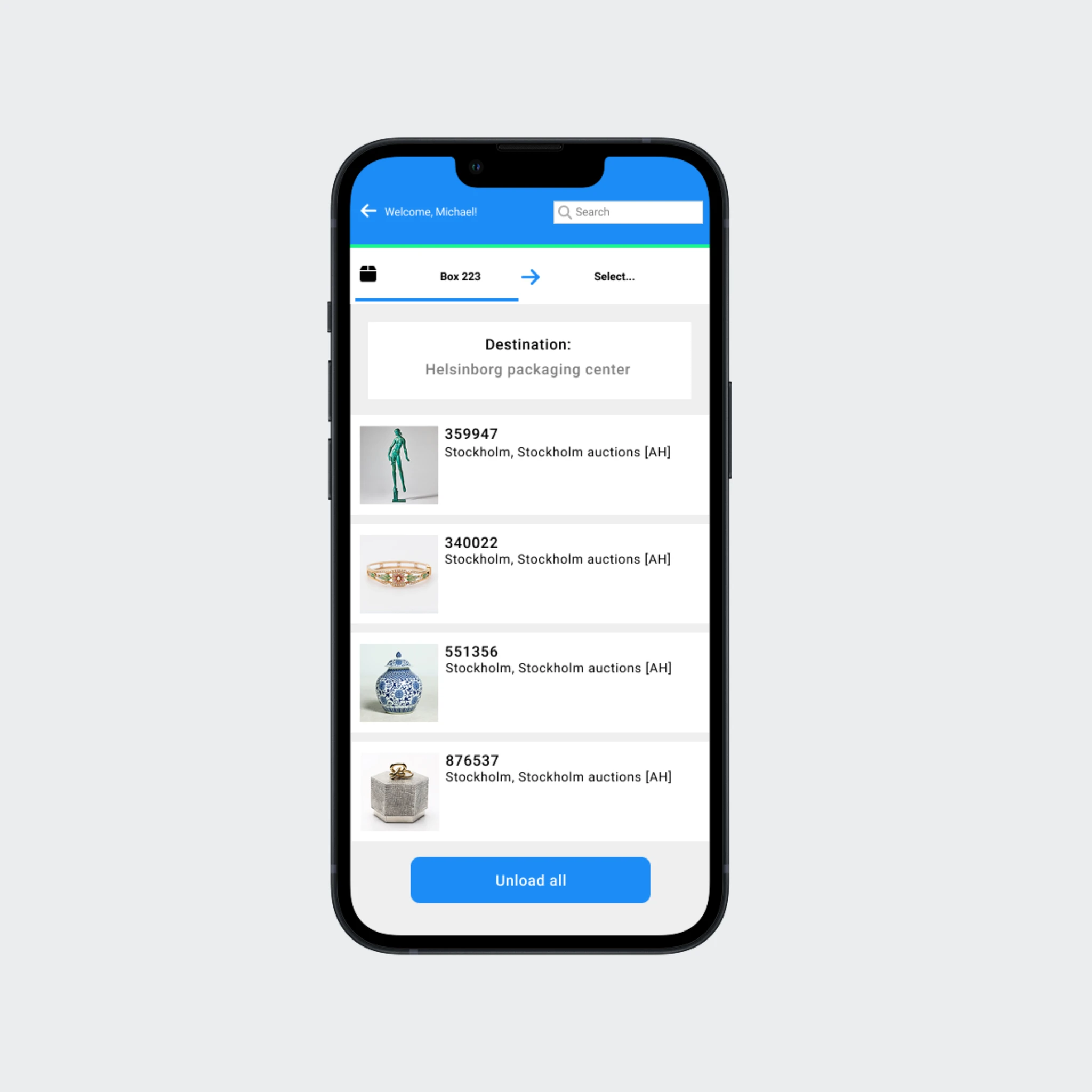
Designing a B2B logistics solution
From 0 to 1 — a logistics app that simplified complex workflows
Outcomes
- ✦Streamlined tracking, helping to reduce location time by 80%
- ✦Decreased support tickets related to tracking issues
- ✦Delivered a high-impact 0-to-1 product that turned operational complexity into an intuitive solution
Challenge
Logistics operations across multiple countries were struggling with inefficiencies in tracking items. Operations staff were spending a lot of time locating shipments, leading to delays, frustrated customers, and a rising number of support tickets. The existing processes weren't scalable and didn't reflect the realities of day-to-day operations. A new solution was needed to streamline tracking and enable operational teams to work more efficiently.
Understanding the Problem
To gain a full picture, I immersed myself in the daily routines of the logistics experts, including both internal teams and external transport partners. Through interviews, field studies, and workflow analysis, the need for tools aligned with real-world practices became clear. Staff were relying on manual processes and workarounds, losing valuable time and struggling to provide accurate customer updates. These inefficiencies created bottlenecks in operations and contributed to a growing number of support tickets, highlighting the need for a tool that could integrate seamlessly into a fast-paced environment.
Objective
The goal was to design and launch a B2B logistics tracking app from the ground up that directly addressed the operational pain points uncovered during research. The product needed to streamline item tracking, reduce inefficiencies across teams, and ultimately improve the customer experience by making shipment updates faster, more reliable, and more transparent.
Approach
My design approach combined product discovery with iterative UX design:
- •User research & discovery: conducted interviews, field studies, and workflow mapping with staff to uncover pain points and define requirements.
- •Prototyping & testing: built interactive prototypes that mirrored real workflows, testing them iteratively with end users to validate assumptions and refine usability.
- •Collaboration with tech: worked closely with engineers to align designs with technical constraints while ensuring a seamless user experience.
- •Design for scale & speed: focused on simplifying complex processes into fast, intuitive interactions, mindful of the high-pressure environment operations staff worked in.
Outcomes
- ✦The app streamlined tracking, helping in some flows to reduce location time by 80%
- ✦Significantly improved customer experience by enabling faster, more accurate updates
- ✦Decreased support tickets related to tracking issues
- ✦Delivered a high-impact 0-to-1 product that turned operational complexity into an intuitive solution
Reflection
This project reinforced the importance of deep immersion in user workflows and field studies when designing for B2B contexts. By grounding design decisions in the realities of operations staff and iterating based on their feedback, I was able to create a product that not only worked technically but truly empowered users and unlocked efficiency at scale.